Free Consultation Call:

What Happens If Someone Violates a Protective Order in Utah?
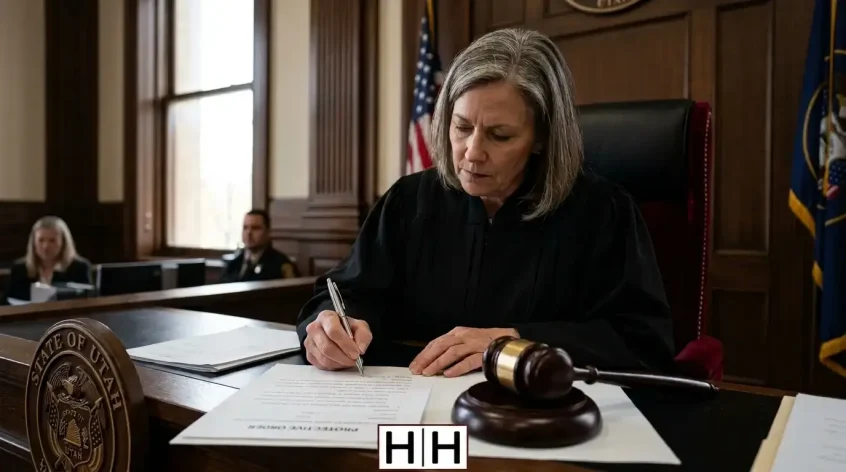
Table of Contents
TL;DR:
When someone violates a protective order in Utah, the court may respond quickly. Violations include contact, threats, or proximity restrictions. Police can arrest the individual. Judges may issue penalties, jail time, or modified orders. The protected person can report violations and request immediate court enforcement through legal filings and hearings.
The call came from a blocked number. A quick voicemail, just a few words, left on a Tuesday afternoon. By Wednesday morning, there were police at the door and a criminal charge on the record. The protective order had been clear. The contact happened anyway. In Utah, that is all it takes.
According to the Utah Women & Leadership Project at Utah State University, 1 in 3 Utah women will experience physical violence, sexual violence, or stalking by an intimate partner in their lifetime. Protective orders in Utah exist to draw a legal line between victims and the people who have harmed them.
In this post, we cover:
- What qualifies as violating a protective order in Utah
- What happens immediately after a violation is reported
- The criminal charges and penalties you could be facing
- How Utah courts handle these cases and what that means for you
- How attorneys with protective order experience can help you
What Is a Protective Order in Utah?
Utah law provides several types of protective orders depending on the nature of the relationship and the threat involved. Understanding which type of order is in place matters because violating any protective order carries serious criminal consequences.
Types of Protective Orders in Utah
Utah protective orders cover a wide range of situations. A civil protective order may be filed by a victim of domestic violence, while a child protective order is available when a minor child is at risk. Orders addressing sexual violence, stalking, and workplace violence are also available, depending on the circumstances.
Each type of order carries the full weight of Utah law. Violating any protective order exposes the respondent to immediate arrest and criminal charges.
How Utah Courts Issue and Enforce Them
When a petitioner files for protection, a judge reviews the request and may sign an ex parte protective order before notifying the other party. This temporary protective order takes effect immediately and remains in force until a court hearing is scheduled.
At that hearing, both the petitioner and the respondent have the opportunity to present evidence. The judge then determines whether to issue a final protective order, which carries longer-term criminal provisions enforceable across Utah and in other states.
What Counts as Violating a Protective Order in Utah?
Violating a protective order in Utah does not require a dramatic incident. A single phone call, one text message, or a brief appearance at a protected location is enough to face criminal charges. Understanding exactly what the order prohibits is the first step for every person involved.
1. Direct Contact and Communication
The most common way an alleged perpetrator violates a protective order is through direct contact with the alleged victim. That includes phone calls, text messages, email, and messages sent through social media or third parties.
It does not matter if the contact was brief or intended to be friendly. Once a protective order is in place, any communication with the alleged victim is off-limits unless the court has specifically allowed it. A person who intentionally violates or knowingly violates that restriction faces immediate arrest.
2. Proximity and Location Restrictions
Most protective orders in Utah require the respondent to stay a certain distance away from the alleged victim’s home, workplace, or school. Showing up at any of those locations, even briefly, violates a protective order.
This applies even in public spaces. If the respondent appears somewhere the alleged victim is present and that contact causes reasonable fear or immediate danger, that is enough for a law enforcement officer to make an arrest.
3. Violations People Often Don’t See Coming
Some violations catch people off guard. Sending a message through a mutual friend, showing up at a location the alleged abuser regularly visits, or responding to contact initiated by the petitioner all still result in criminal charges.
Utah law is clear on this point. The respondent is bound by the court order regardless of who initiates contact. Repeated violations significantly increase the severity of criminal charges.
What Happens Immediately After a Violation Is Reported
When a protective order violation is reported in Utah, law enforcement officers are not given discretion on how to respond. The Utah Cohabitant Abuse Procedures Act requires a specific, immediate response. Understanding that process matters whether you are the alleged victim or the person accused.
The Role of Law Enforcement Officers
Under Utah Code § 77-36-2.4, a law enforcement officer must arrest the alleged perpetrator when there is probable cause to believe they have violated a protective order. The police officer does not need a warrant to make that arrest. This mandatory arrest policy exists to protect the alleged victim and enforce compliance with the court order.
This is not a situation where officers weigh the circumstances and decide whether to act. The arrest is mandatory. From the moment a violation is reported, and probable cause exists, the alleged perpetrator faces immediate arrest.
What Happens at the Court Hearing
After the arrest, the accused will be booked and held until arraignment. At that hearing, a judge reviews the criminal charges, sets bail conditions, and may impose additional restrictions on top of the existing ex parte order or final protective order. The arraignment typically happens within 72 hours of the arrest.
Bail is not guaranteed in domestic violence cases. A judge may determine that releasing the accused poses a risk to the alleged victim, particularly when there is evidence of repeated violations or immediate danger. That assessment directly influences every decision the court makes going forward.
Criminal Charges and Penalties for Violating a Protective Order in Utah
A protective order violation in Utah is a criminal offense, and the penalties scale with the conduct’s severity and frequency. Utah courts take these cases seriously, and a conviction carries consequences that reach far beyond jail time and fines. Here is what Utah law provides.
Legal Penalties for Protection Order Violations
| Violation | Charge Level | Max Jail Time | Max Fine |
| First violation | Class A Misdemeanor | Up to one year | $2,500 |
| Subsequent violation | Third-degree felony | Up to five years | $5,000 |
| Violation involving a firearm | Second-degree felony | Up to 15 years | $10,000 |
First Violation — Class A Misdemeanor
A first violation of a protective order in Utah is charged as a Class A misdemeanor and classified as a domestic violence offense. That carries a penalty of up to one year in jail and a fine of up to $2,500.
A misdemeanor conviction still creates a permanent criminal record. It affects employment, housing, custody arrangements, and parent time long after the case is resolved. Many people underestimate how far-reaching a single conviction may be.
Subsequent Violations — Third Degree Felony
Each violation after the first may result in a third-degree felony charge with increased penalties. That means up to five years in prison and fines of up to $5,000. A subsequent violation is treated as evidence of an ongoing pattern, and Utah courts sentence accordingly.
According to the Utah Department of Health and Human Services, 1 in 3 homicides in Utah are related to domestic violence, and more than 2 in 5 female homicide victims were killed by a current or former partner. That context shapes how seriously Utah courts treat repeated violations and felony convictions in domestic violence cases.
Greater Penalty and Federal Consequences
A felony conviction for violating a protective order also triggers federal firearm restrictions under 18 U.S.C. § 922(g)(9). The convicted person loses the right to possess or control a firearm or ammunition for life.
Those facing criminal no-contact order violations or greater penalty enhancements should understand that the criminal provisions extend well beyond the initial sentence. The consequences follow a person long after the case is closed.
How Utah Courts Handle Protective Order Violations
Utah courts treat violations of protective orders as serious criminal matters, not minor infractions. The court’s response is swift. The outcomes affect every area of a person’s legal life.
How Utah Judges Evaluate These Cases
When a protective order violation comes before a judge in Salt Lake City or anywhere across Utah, the court reviews the nature of the conduct, the history between the parties, and any prior violations. A first-time, non-violent violation is treated differently from repeated violations or conduct involving immediate danger.
The court also weighs whether the alleged perpetrator poses an ongoing threat to the alleged victim. That assessment influences bail decisions, sentencing, and whether the judge signs additional restrictions on top of existing Utah protective orders.
How a Violation Affects Custody and Other Proceedings
A protective order violation does not stay contained to the criminal case. Utah courts treat it as relevant evidence in divorce proceedings, child custody determinations, spousal support hearings, and parent time arrangements.
A judge may view a domestic violence offense as a sign that one party poses a risk to a minor child. That perception restricts parent time, alters custody arrangements, and affects how the court rules on other contested issues. Family law judges in Utah are not required to wait for a criminal conviction before acting.
Why You Need an Experienced Attorney for a Protective Order Case
A protective order violation in Utah derails every area of a person’s life, from their freedom and finances to their custody arrangements and career. Whether you are the alleged victim seeking enforcement or the accused facing criminal charges, the stakes are too high to navigate alone.
Utah protective orders involve overlapping civil provisions and criminal provisions that most people are not equipped to untangle without help. An experienced attorney understands how Utah courts evaluate these cases and what evidence matters at a court hearing.
Here is what the right legal representation does for you:
- Reviews the terms of the court order and identifies whether a violation of a protective order actually occurred under Utah law
- Advises the alleged victim on documenting incidents and pursuing enforcement through the proper legal channels
- Builds a defense strategy for the accused that accounts for the specific facts, circumstances, and criminal charges involved
- Protects your interests in related proceedings, including custody arrangements, divorce, parent time, and sentencing
Protective order cases in Utah move fast, and the consequences reach further than most people expect. Having an experienced family law attorney on your side from the beginning gives you the best possible footing no matter which side of the order you are on.
You Don’t Have to Navigate This Alone
A protective order violation in Utah carries consequences that reach far beyond the courtroom. The criminal charges, the impact on custody arrangements, and the long-term effect on your record demand serious legal attention.
Our experienced attorneys at Henriksen Law understand how Utah courts handle these cases and what it takes to protect your rights on either side of a protective order. We have guided Utah residents through some of the most difficult legal situations a person will ever face.If you or someone you love is dealing with a protective order violation in Utah, do not wait.
Contact Henriksen Law today to schedule a consultation and take the first step toward protecting what matters most.
Frequently Asked Questions
1. What counts as a protection order?
Any contact, communication, or physical approach that the order restricts qualifies. This includes calls, messages, or showing up at restricted locations.
2. Can police arrest someone for a violation?
Yes, police can arrest the person if there is probable cause that the order was violated, even without a warrant.
3. What penalties can the court issue?
Penalties can include jail time, fines, probation, or stricter terms added to the protective order depending on severity.
4. How does a victim report violations?
They can call law enforcement immediately and also file a motion in court to enforce or modify the order.
5. Can a protective order be changed?
Yes, either party can request a hearing. The judge may adjust terms based on new facts or safety concerns.
